Faceless YouTube Channels Need Niches More, Not Less
Faceless YouTube channels are everywhere. Over 40% of the top 1,000 YouTube channels operate without showing a creator's face (OutlierKit). In 2025, faceless channels and accounts made up 38% of all new creator monetization ventures (vidBoard.ai). The format is clearly working.
But most advice about faceless channels focuses on one question: which niche should I pick?
The better question is: why does niche matter more when there's no face on screen?
Why does a faceless channel depend more on niche clarity?
When a creator shows their face, viewers form a connection with the person. They subscribe because they like the personality, the delivery, the energy. Even if the next video is on a slightly different topic, that personal loyalty brings them back. The creator becomes the reason to click.
Faceless channels don't have that. There's no personality hook pulling viewers back. The content itself has to do all the work. And the algorithm is the only distribution channel connecting your video to the right viewer.
Here's how that algorithm works in practice. YouTube's recommendation system matches videos to viewers based on watch history patterns. In February 2026, YouTube rolled out a significant update to the Browse feed, shifting from broad topic categories to watch history clusters — grouping viewers by micro-interest patterns rather than general subjects (OutlierKit). This means the system is now better at finding the right viewers for focused content. But it also means generic content gets filtered out faster, because it doesn't match any tight cluster.
For a face-based creator, a slightly off-topic video might still get a push, because their existing subscribers click out of loyalty. For a faceless channel, every video lives or dies on whether the algorithm can match it to a specific audience segment. No clear niche = no clear audience signal = no push.
What happens when a faceless channel skips the niche?
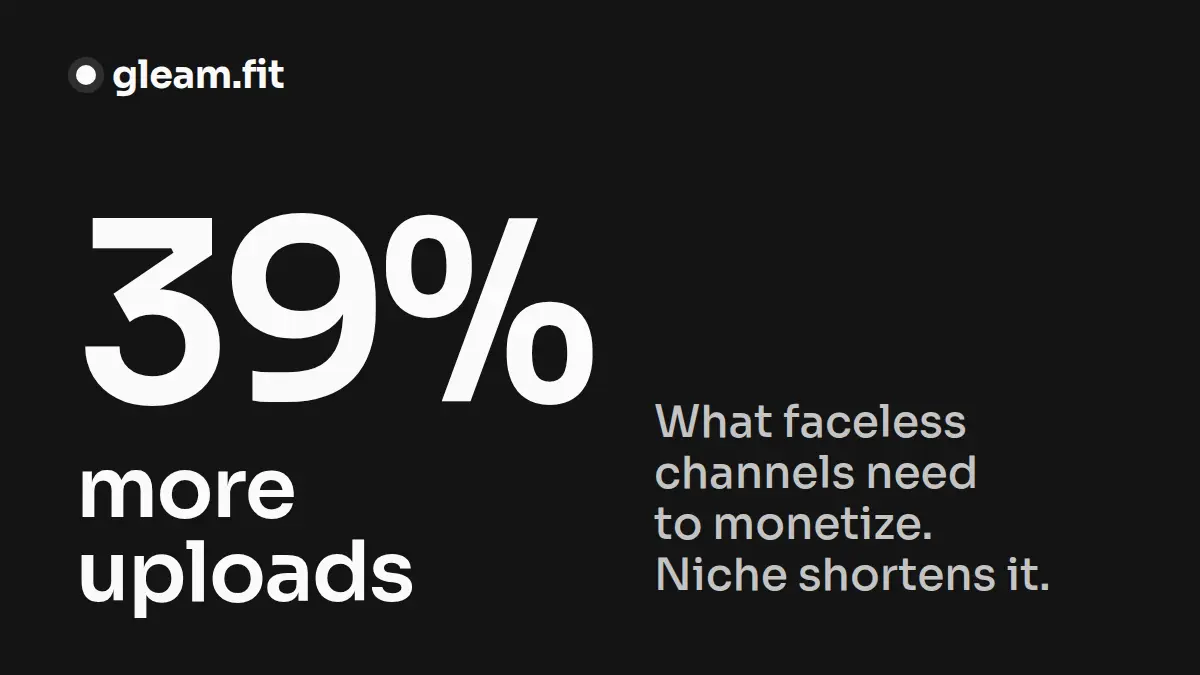
The data tells a straightforward story. Faceless channels require about 39% more uploads to reach YouTube's monetization thresholds (1,000 subscribers and 4,000 watch hours) compared to face-based channels (vidBoard.ai). That's already a significant gap. Without a defined niche, that gap grows wider.
Every unfocused upload resets the signal the algorithm is trying to build. If video one is about productivity apps, video two is about travel hacks, and video three is about stock investing, the algorithm has no pattern to work with. It can't build a viewer cluster around your channel. Each video starts from scratch.
On top of that, YouTube is actively cracking down on low-quality, repetitive content. In his 2026 annual letter, YouTube CEO Neal Mohan directly addressed what he called "AI slop" — low-effort content produced at scale without original insight. YouTube is building on its existing spam and clickbait systems to reduce the spread of this type of content (YouTube Blog). In early 2026, thousands of faceless channels had monetization suspended under the updated policy.
This creates a two-sided pressure for faceless creators:
Without a niche, the algorithm can't find your audience, so your videos don't get recommended.
Without quality and originality, YouTube's content filters may flag your channel, especially if it looks like mass-produced template content.
A clear niche solves both problems. It gives the algorithm a signal to match against, and it forces you to develop depth rather than breadth — which is exactly what separates quality faceless content from AI slop.
How does YouTube's algorithm treat faceless content differently?
It doesn't. YouTube's algorithm evaluates all channels on the same core metrics: click-through rate, watch time, audience retention, and satisfaction signals. Whether a face appears in the video has no direct impact on ranking. The algorithm doesn't know or care if you're on camera.
But here's the subtle difference. Face-based creators generate a signal that faceless channels can't: subscriber return rate driven by personal loyalty. When someone subscribes because they like the creator as a person, they're more likely to click on the next video regardless of the topic. That click sends a positive signal to YouTube, which reinforces the channel's reach.
Faceless channels lack that loyalty buffer. Their subscriber return rate depends almost entirely on topic consistency. If your channel is about budget investing and you publish a video about budget investing, your existing subscribers click. If you suddenly publish a video about meal prep, they don't.
This makes niche consistency a much heavier signal for faceless channels. It's not that the algorithm penalizes faceless content. It's that faceless content without niche consistency doesn't generate the engagement patterns the algorithm needs to keep recommending it.
What does a well-niched faceless channel actually look like?
Niche selection for a faceless channel isn't just "pick a topic." It's the intersection of three things:
Topic — What subject area you cover (e.g., personal finance)
Format — How you deliver it (e.g., animated explainers, screen recordings, narrated documentaries)
Audience — Who you're making it for (e.g., college students, first-time investors, retirees)
A channel that covers "personal finance with animated explainers for college students" is a niche. A channel that covers "personal finance" is a category. The algorithm can work with the first one. It struggles with the second.
This matters more in 2026 because viewer expectations have shifted. According to a ContentGrip and Genspark study, 72% of Gen Z viewers say they care more about content quality than whether they can see the creator's face. Viewers aren't looking for a personality — they're looking for value in a specific area. If your faceless channel delivers that consistently, the algorithm builds a reliable audience cluster around it.
Here's a practical test. Look at your last 10 uploads and ask:
Would a viewer who loved video 1 also want to watch video 10?
Can you describe your channel's audience in one sentence without using the word "everyone"?
Are your thumbnails and titles converging around a recognizable pattern?
If the answer to any of these is no, your niche isn't clear enough. And for a faceless channel, that's the most expensive problem to have — because there's no personality to compensate.
The bottom line
Faceless is a production choice. Niche is a growth strategy. Most creators treat them as the same decision. They're not.
Going faceless removes the personality hook that helps face-based creators survive without a tight niche. It makes you fully dependent on the algorithm's ability to match your content with the right viewers. And the algorithm can only do that when your content sends a consistent, specific signal.
Three things to remember:
Faceless channels need about 39% more uploads to monetize. A clear niche shortens that path.
YouTube's Browse feed now matches content to watch history clusters, not broad categories. Niche content wins.
YouTube is filtering out low-quality, repetitive content more aggressively than ever. Depth beats breadth.
The face was never the point. The niche always was.
Ready to find your next video idea?
Gleam helps you discover content gaps and outlier videos with real YouTube data.
Start Free TrialRelated Articles
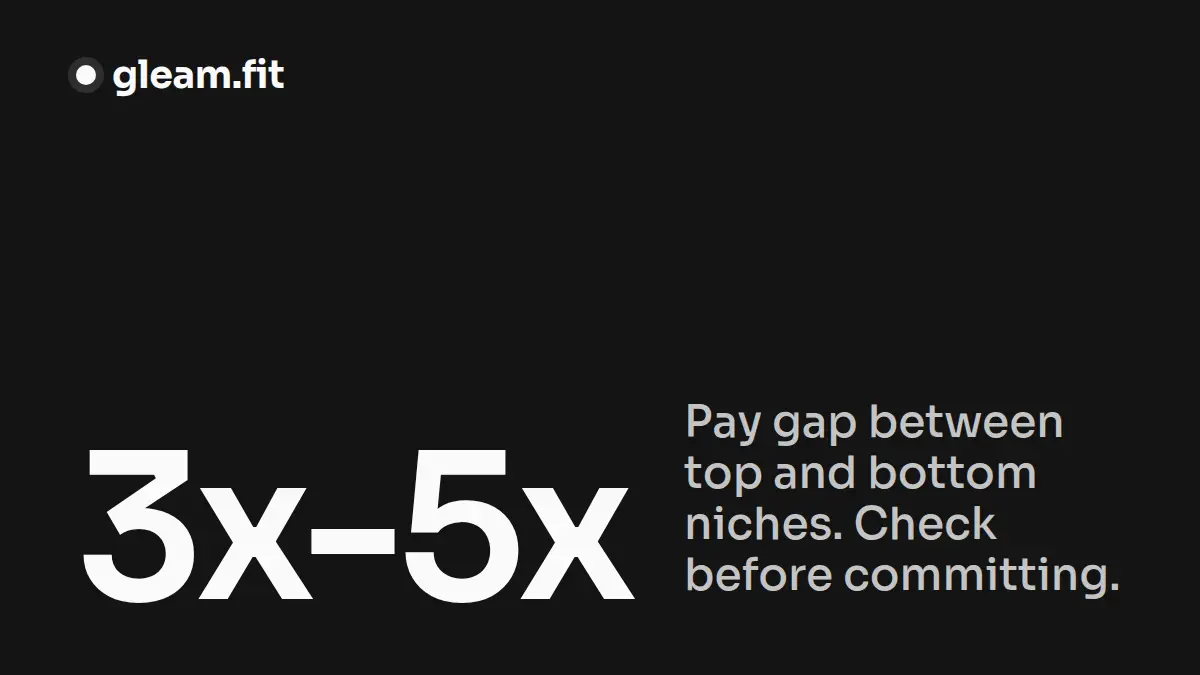
YouTube CPM by Niche: How to Read a Niche's Pay Ceiling Before You Commit
Two YouTube niches with the same views can earn very different money. A niche sets its CPM band the day you pick it — here's how to read that pay ceiling before you commit.
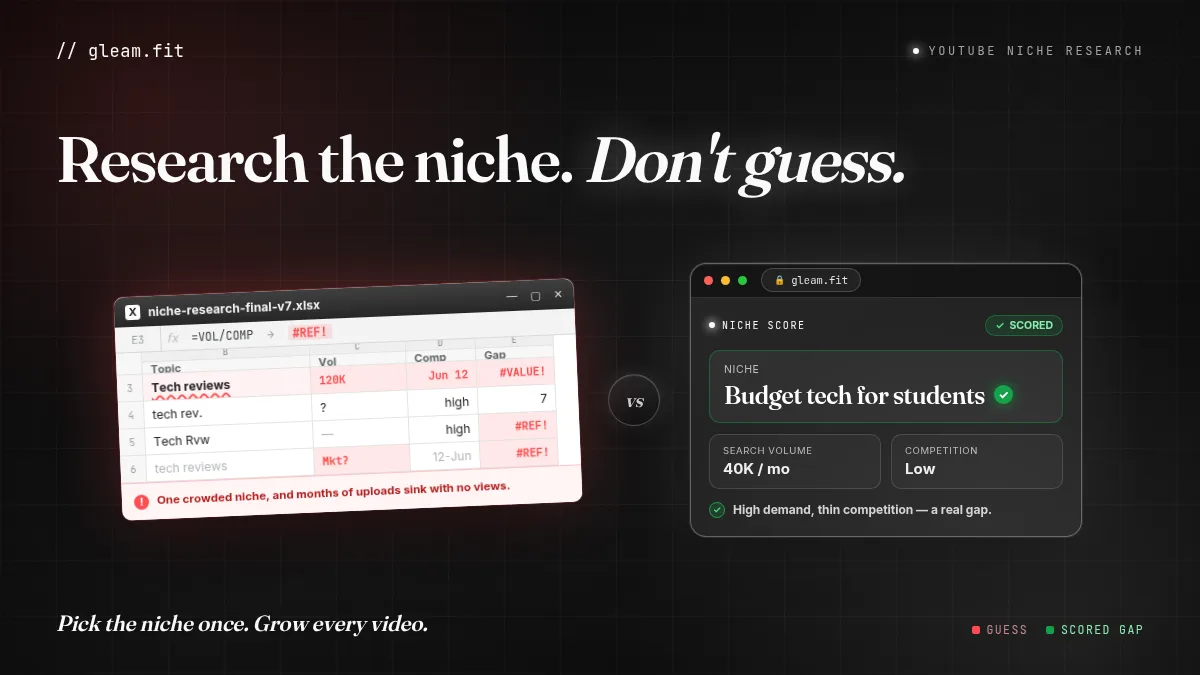
How to Research a YouTube Niche in 4 Reads
Most creators check search volume and commit. A repeatable four-read method — demand, competition structure, reachability, and revenue fit — to weigh a YouTube niche before you choose it.
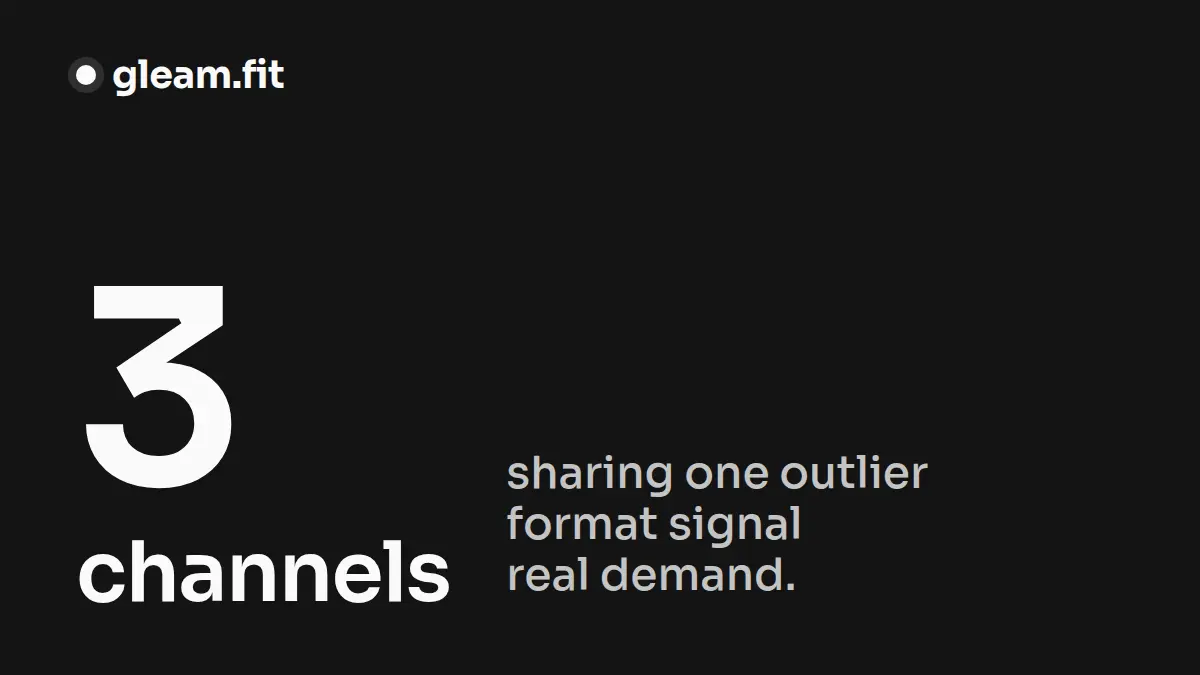
One Outlier Is Luck. Three Across Channels Is a Niche Signal
One viral outlier can be luck. When the same format outperforms across several channels in a niche, it signals demand you can read before you commit.