How to Check If a YouTube Niche Is Saturated
Short answer: a YouTube niche is saturated when search demand is low relative to the amount of strong, recent content already serving it — not simply when many videos exist. To check this before you commit, you compare three things: real search demand, the size and concentration of channels already ranking, and how fresh and strong their content is. This guide shows how to run that check in a few minutes and how to read the signals so you do not spend six months on a niche that was closed before you started.
What does a "saturated" YouTube niche actually mean?
A saturated niche is one where the supply of good, recent content already meets or exceeds viewer demand, so a new channel has little room to rank or get recommended. Saturation is a ratio, not a raw count. A niche with 50,000 videos but huge, growing demand can be wide open, while a niche with 2,000 videos and almost no search interest is effectively closed.
This is why "there are already a lot of videos on this" is a weak test. What matters is demand relative to quality supply: how many people want this content versus how well existing creators already serve them.
Saturation also has a time dimension. A niche is rarely permanently open or closed — it shifts as creators pile in and as search interest rises or fades. A check you ran a year ago is not the check you need today, which is why the decision that matters is the one you make right before you commit, not the one you wish you had made after publishing a season of videos into a field that already filled up.
Why does eyeballing view counts fail?
Eyeballing view counts fails because high view counts can mean a healthy, growing niche just as easily as a closed one, and a few mega-channels distort the average. If three giant channels pull millions of views each, the niche looks lucrative — but those views are concentrated, and a new creator competes against entrenched authority, not an open field.
The averages lie in both directions. A single viral outlier inflates the apparent ceiling, while a wall of low-engagement uploads hides the fact that nobody is actually watching. According to 2026 creator-earnings aggregations published by sites like OutlierKit and upGrowth, the same surface metric — views — maps to wildly different outcomes depending on niche structure, with gaming channels often reported around $1–$5 RPM while finance content is reported in the $15–$50 CPM range. Views alone tell you none of that.
There is also a subtler trap: view counts say nothing about who earned them. A niche where the typical ranking video comes from a 5,000-subscriber channel is structurally different from one where every top result is a 2-million-subscriber brand, even if both show similar view numbers. The first is reachable; the second is a wall. You only see that difference when you look at channel size and concentration, not the view column.
How do you check if a YouTube niche is saturated before you commit?
To check niche saturation before you commit, search the niche's core keyword and read four signals together: demand, competition concentration, content freshness, and content quality. No single number decides it — saturation is the pattern across all four. A niche is a safe entry when demand is real, channels are diverse, existing videos are aging, and their engagement is weak.
Here is what each signal tells you:
Demand: Is anyone actually searching for this? Search autosuggest depth and search-interest momentum show whether the topic is rising, flat, or declining. Rising demand forgives some competition; declining demand makes even a quiet niche a bad bet.
Competition concentration: Look at the median channel size, not the average. Median resists distortion from one or two giants. If the typical ranking channel is small, the field is reachable; if the median is large, authority is entrenched.
Channel diversity: Count how many unique channels hold the top results. A niche dominated by a few creators is harder to break into than one spread across many — even at the same video count.
Freshness and quality gap: If the strong videos are old and existing engagement is weak, there is room to outperform with fresher, better content. If recent videos already have high engagement, the gap is closed.
This is the method gleam.fit automates. Searching a keyword returns a Gap Score from 0 to 100, where higher means more demand relative to quality supply and a score under 20 is flagged as saturated. Alongside it you see a competition label derived from the median subscriber and view count (so a few mega-channels do not skew the read), a count of unique channels in the results, a freshness reading, a content-quality gap, and a demand signal that combines YouTube autosuggest, search-interest momentum, and result volume. The point is not the score itself — it is seeing all four signals at once instead of guessing from a video wall. Treat it as a structured signal from the keyword's result set and search data, not a guarantee, and sanity-check it against the actual channels ranking.
What saturation signals should you check first?
Check demand first, because no other signal matters if nobody is searching. A niche with low competition and zero demand is not an opportunity — it is a dead niche. Only after demand is confirmed do competition concentration, channel diversity, and content freshness decide whether you can realistically rank.
A practical order:
Is there real, stable or rising demand? If search interest is flat-to-declining, stop here regardless of how open the field looks.
Is the median competitor small? A small median means the algorithm is still handing reach to new entrants.
Are the top results spread across many channels? Diversity signals an open field; concentration signals gatekeepers.
Is existing content old or weak? Aging libraries and low engagement are the clearest "room to enter" signal.
Does the money math survive? A reachable niche with a usable estimated CPM beats a crowded high-CPM one. Treat any CPM figure as an estimate that shifts with country, audience, and ad demand.
Does a low-competition niche always mean opportunity?
No. Low competition only means opportunity when it is paired with real demand. Most "low-competition niche" lists ignore this, and the most common mistake creators make is treating a quiet niche as a blue ocean when it is actually empty because viewers do not want it. Competition you can beat is worthless if there is no audience behind it.
The reverse is also true: a niche that looks crowded can still be open if demand is climbing faster than supply, or if the existing content is stale. Saturation analysts who model niche "saturation curves," such as the team at 1of10, note that niches open and close over time — a gap visible today can close within a year, which is exactly why a pre-commitment check beats a one-time gut call. The question is never "is this niche busy?" It is "is demand outrunning the quality supply, right now, for a channel my size?"
Sub-niching is the usual escape from a crowded field, and it works — but only up to the point where demand is still large enough to sustain a channel. Narrowing reduces competition and audience at the same time, so the goal is the narrowest niche that still clears the demand test, not the narrowest niche you can find.
The pre-commitment saturation checklist
Before you commit months to a niche, confirm all five:
Search demand is real and at least stable, ideally rising.
The median competing channel is small enough to out-reach.
Top results are spread across many channels, not owned by a few.
Existing strong videos are aging, or their engagement is weak.
The estimated earnings math still works for a reachable audience, not just a high headline CPM.
If a niche fails the demand test, no amount of low competition saves it. If it passes demand but fails concentration and freshness, it is saturated for a new channel even if the raw video count looks modest. Run the check before you film, not six months in — that is the entire difference between picking a niche with data and picking one on a hunch.
Note on AI-search visibility: getting cited by AI answer engines depends heavily on third-party signals — Reddit, forums, and review mentions — that build over months and sit outside any single article.
Ready to find your next video idea?
Gleam helps you discover content gaps and outlier videos with real YouTube data.
Start Free TrialRelated Articles
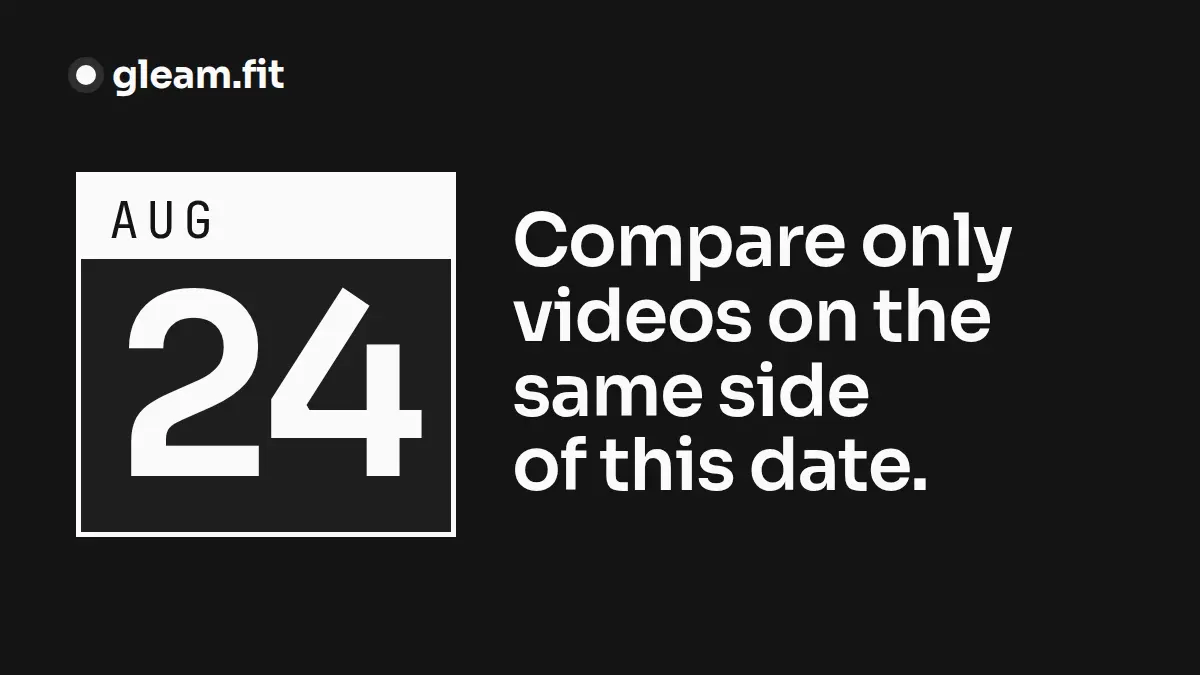
YouTube's View Count Change: What It Does to Niche Research
YouTube now counts a long-form view from the first frame, autoplay included. Videos published before August 24, 2026 carry mixed counts, so niche comparisons need a date split.
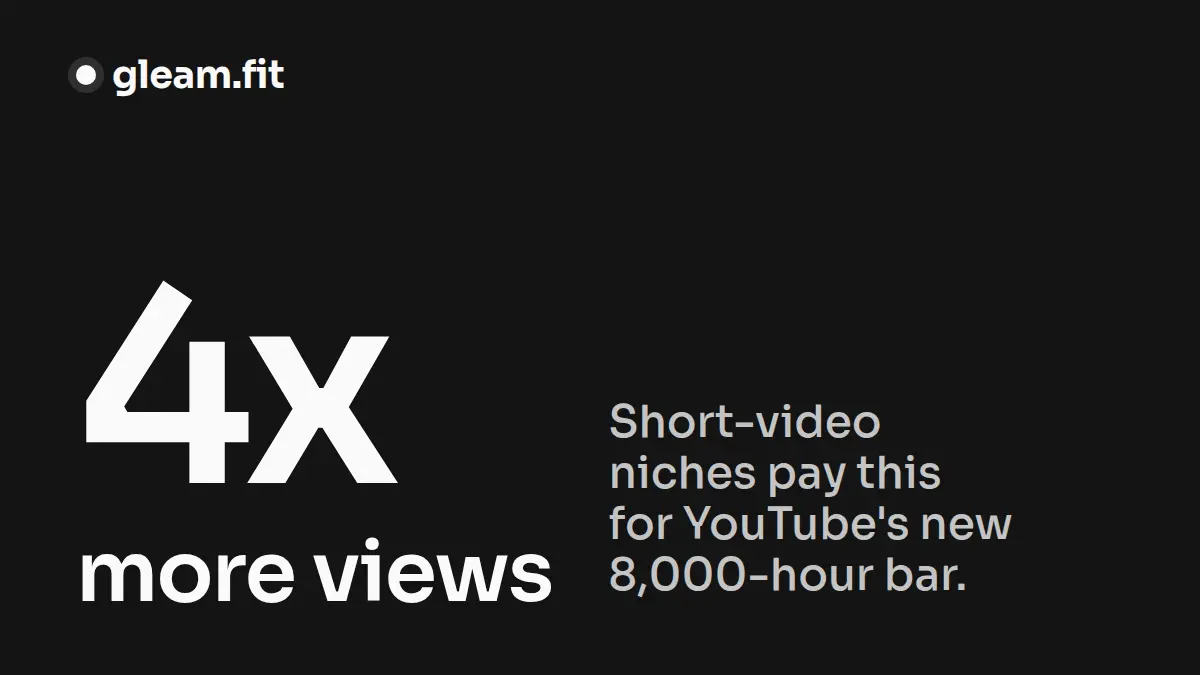
YouTube's 8,000 Watch Hours Rule Is a Niche Math Problem
The YouTube Partner Program bar doubles to 8,000 watch hours on February 1, 2027. That is 480,000 minutes, and the views it takes to produce them depend on your niche's format length — a 4x spread between short- and long-format niches.
Which YouTube Niches Get Limited Ads — and What Moves Them Up
YouTube sorts the same niche into three ad-revenue tiers, not a yes or no. Which niche archetypes sit on two rungs at once, which lever moves them up, and the one line that no framing fixes.