Some YouTube Niches Reward Formats YouTube Won't Monetize
On July 13, 2026, YouTube spelled out, in plain monetization language, three kinds of content it won't pay for: templated or repetitive uploads, "unsatisfying or off-putting" content, and AI personas posing as experts. It's worth being precise about what this was: a clarification of wording, not a new rule. But if you're at the stage of choosing a niche rather than defending an existing channel, that clarity is a gift — it lets you check something you couldn't easily see before you commit months of uploads.
Because here's the part the "how to avoid demonetization" guides skip: for a new creator, monetization exposure isn't mainly a production problem. It's a niche-selection problem. Some niches reward exactly the formats YouTube just named — and you inherit that risk the day you pick the niche, long before you shoot a single video.
What exactly did YouTube clarify?
YouTube's channel monetization policies now name three content types as ineligible for ad revenue under the inauthentic-content rule. None of them are about whether you used AI — they're about whether each video delivers materially varied, original value:
- Generic or repetitive content — videos that look "made with a template" or feel repetitive after you watch a few in a row: scrolling-text slideshows, near-identical storylines, feed-reading with no commentary.
- Unsatisfying or off-putting content — material built on emotionally manipulative formulas or designed to shock for the sole purpose of getting views, without substance or resolution.
- AI personas posing as experts — an AI "doctor," "lawyer," or "financial advisor" dispensing advice on health, legal, finance, or political topics without disclosing that it isn't a real person.
The first category was already well-known (it's the old "repetitious content" rule, renamed to "inauthentic content" in July 2025). The other two are the parts newly made concrete.
Did the rules actually change, or just the wording?
Just the wording. Tubefilter reports the update plainly: "The rules themselves haven't changed, and creators are not facing demonetization for new reasons." All three categories were already prohibited — YouTube simply gave them clearer, more actionable names. So this isn't a crackdown you need to react to overnight.
The value isn't urgency. It's precision. For the first time, the two vaguest failure modes — "off-putting" and "fake expert" — have plain definitions. And a plain definition is exactly what you need to evaluate a niche before you build in it, instead of finding out at the 500-subscriber monetization review.
Why is this a niche-selection problem, not just a production one?
Because a niche has a dominant winning format — the shape of the videos that actually get views in it — and you don't get to opt out of it easily. If the top-performing videos in a niche are near-identical shock compilations or AI-voiced list slideshows, that's not a coincidence; it's what the niche's audience and the algorithm currently reward. Enter it, and the growth path pulls you toward the same template.
That's the trap. You can write the most original script in the world, but if the niche only rewards the templated version, you're fighting the current — and the templated version is precisely what the policy now names. The exposure lives in the niche, not just in your editing choices. So the honest question to ask before you commit isn't "can I make good videos?" It's "does winning in this niche require a format YouTube won't monetize?"
How do you tell if a niche's winning format is exposed?
Look at the videos that are actually outperforming in the niche — the outliers, especially from small and mid channels — and read their structure, not their topic. The exposure shows up as a pattern across the winners, not in any single video. Use this table to score a niche before you build in it:
| If the niche's top videos look like… | Policy category at risk | Exposure |
|---|---|---|
| Near-identical templates — same intro, same pacing, same thumbnail formula across every winner | Generic / repetitive | High |
| Recycled shock or distress with no new information or resolution (rage-bait, gore, "you won't believe") | Unsatisfying / off-putting | High |
| AI-voiced "expert" advice on health, money, law, or politics with no named human behind it | AI expert persona | High |
| Scrolling text or slideshow over stock footage, reading from feeds, minimal commentary | Generic / repetitive | High |
| Winners are structurally varied — different angles, real reporting or first-hand experience, a visible human POV | None | Low |
The signal that separates a low-exposure niche from a high-exposure one is format variance across the winners. If every outlier is the same shape, the niche rewards the template — high exposure. If the outliers win in different ways, there's room to build something materially varied, which is exactly what the policy protects.
Here's the table in use. Say you're weighing two sub-niches. In "AI-generated horror stories," you pull the top outliers and find every one is the same: synthetic voice, stock-image slideshow, no named creator, minimal variation between videos — that's two categories at once (generic template and, if it leans on jump-scare shock, off-putting), so exposure scores High. In "solo-founder build logs," the outliers are all over the place — screen recordings, talking-head retros, teardown essays — different shapes winning on substance, so exposure scores Low. Same amount of demand, opposite policy risk. Without reading the winning format, you'd never see the difference; you'd just see that both niches "get views."
Isn't true crime huge? Does "off-putting" ban whole niches?
No — and this is where creators over-read the news. The policy doesn't ban topics; it targets formats. A true-crime channel that reports carefully, adds new information, and gives context is fine. The exposure is specific: a channel that recycles the same shocking event structure across videos with minimal new information runs afoul of the rule because it prioritizes emotional impact over substance.
So don't cross off "true crime" or "commentary" or "news" — cross off the recycled-shock template inside them. Two channels in the same niche can sit on opposite sides of this line. Which is exactly why you evaluate the winning format, not the topic label, when you pick.
How does gleam help you check this before you commit?
This is the job gleam is built for: seeing what a niche actually rewards before you invest in it. gleam pulls the outlier videos across many channels in a niche — the videos punching above their subscriber count — so you can read the winning format at a glance instead of eyeballing two or three uploads and guessing. If every outlier is the same template, you'll see the uniformity; if the niche rewards varied, human-led work, you'll see that too.
Paired with the demand and competition read, that turns "is this niche monetizable?" from a gut call into a data one. You're not just checking whether people watch the niche — you're checking whether the format that wins in it is one you can build on without walking into a policy wall.
"Every niche has some template channels — why does it matter?"
They say: every niche has copycats, so this is just noise. You say: the question isn't whether template channels exist — it's whether they're the ones winning. A niche where the templated version underperforms and the original version breaks out is a green light. A niche where nothing but the template gets views is telling you what you'd have to become to grow there. That difference is invisible from a few videos and obvious from the outlier spread — and it's worth an afternoon of checking before you spend six months finding out the hard way.
Pick the niche whose winners you'd be proud to imitate. For the rest of the framework, see how to find a low-competition niche with data, why template density is a niche-level risk, and how outliers across channels reveal a niche's real signal.
Ready to find your next video idea?
Gleam helps you discover content gaps and outlier videos with real YouTube data.
Start Free TrialRelated Articles
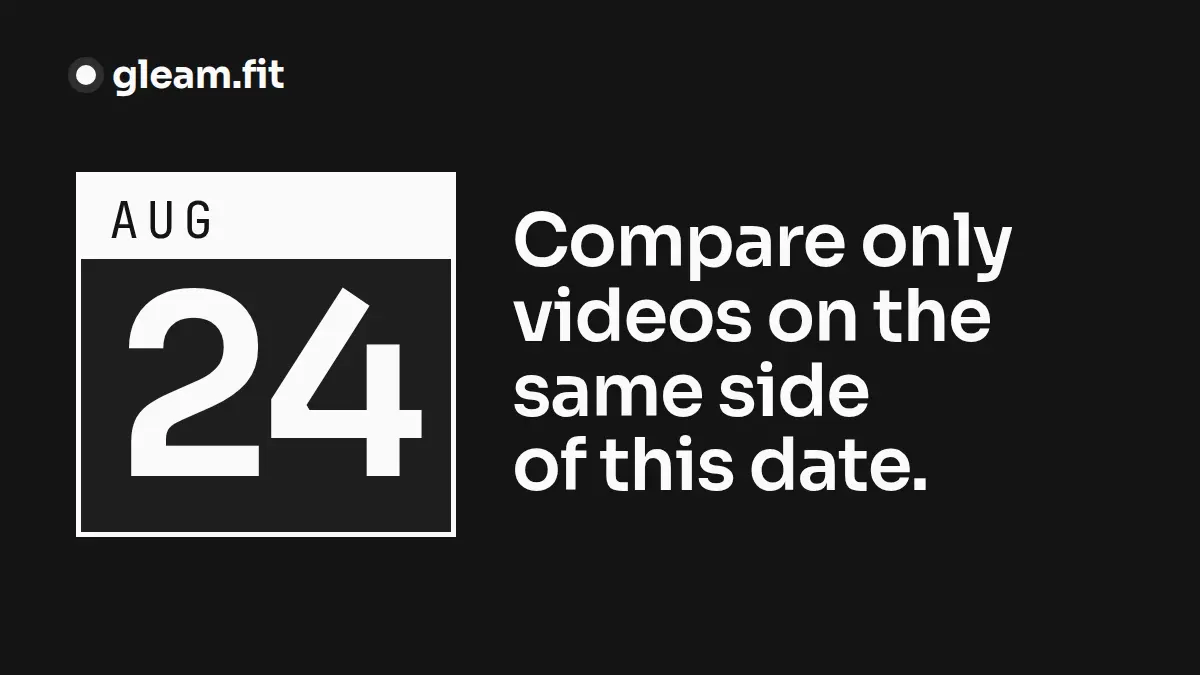
YouTube's View Count Change: What It Does to Niche Research
YouTube now counts a long-form view from the first frame, autoplay included. Videos published before August 24, 2026 carry mixed counts, so niche comparisons need a date split.
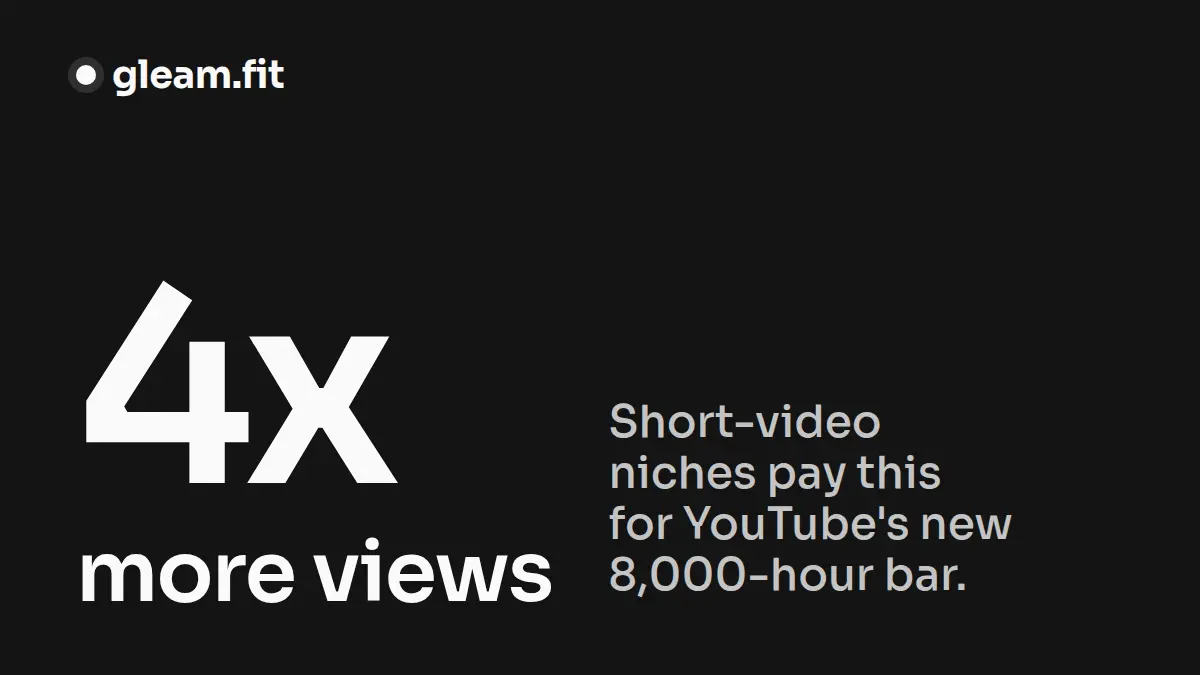
YouTube's 8,000 Watch Hours Rule Is a Niche Math Problem
The YouTube Partner Program bar doubles to 8,000 watch hours on February 1, 2027. That is 480,000 minutes, and the views it takes to produce them depend on your niche's format length — a 4x spread between short- and long-format niches.
Which YouTube Niches Get Limited Ads — and What Moves Them Up
YouTube sorts the same niche into three ad-revenue tiers, not a yes or no. Which niche archetypes sit on two rungs at once, which lever moves them up, and the one line that no framing fixes.