YouTube Keyword Research: Stop Chasing Search Volume
Most creators start YouTube keyword research the same way. Open a tool, sort by search volume, pick the biggest number. It feels like a smart, data-driven move. But it leads to the same crowded topics that hundreds of other creators are already covering.
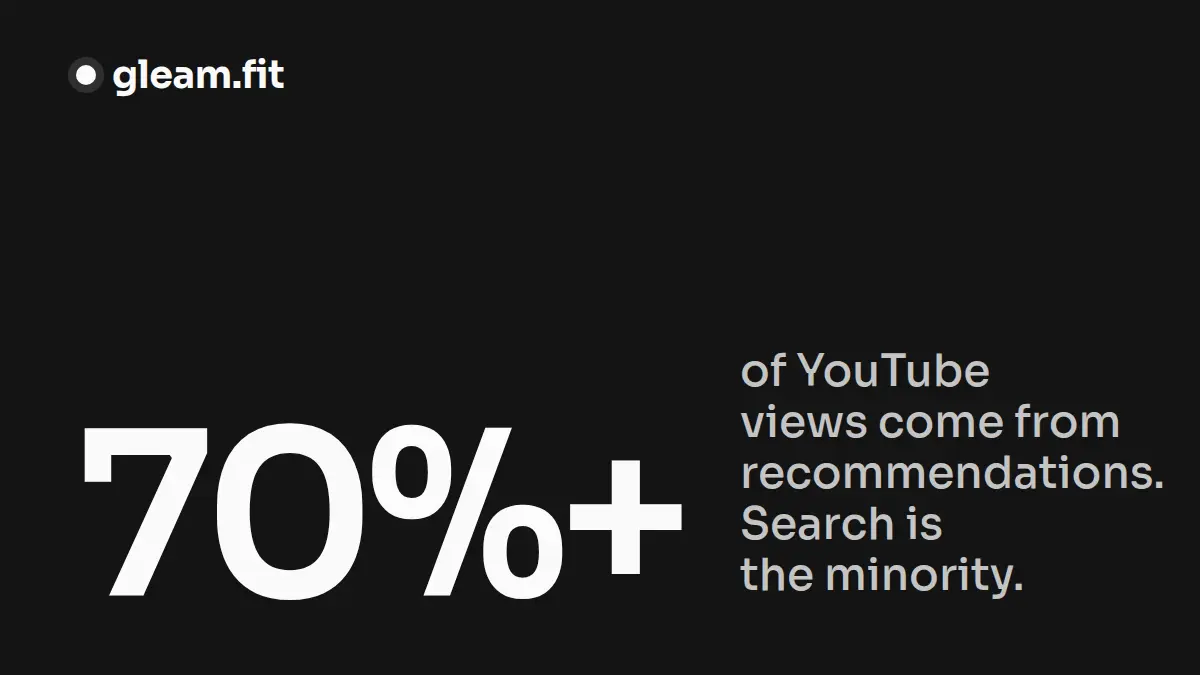
YouTube keyword research isn't about ranking in search results. It's a content planning tool — the bridge between your niche and your next video. Over 70% of YouTube views come from recommendations, not search (YouTube). That changes how you should think about keywords entirely.
This guide covers why high search volume misleads creators, what keyword research actually does for your channel, how to evaluate keywords beyond volume, and how to find the content gaps that give small channels an edge.
Why Does High Search Volume Mislead Creators?
High search volume feels safe because it confirms people are looking. But on YouTube, high volume almost always means high competition. Over 500 hours of video are uploaded to YouTube every minute (YouTube). For any popular keyword, hundreds or thousands of videos already exist targeting the same phrase.
A new channel targeting "how to start a YouTube channel" is competing against creators with millions of subscribers and years of built-up authority. The video might surface on page 3 or 4 of search results, where almost no one scrolls.
The deeper issue is that search is only one of several discovery paths on YouTube. Over 70% of what people watch comes from Browse features (the homepage) and Suggested videos (sidebar recommendations). These recommendation systems don't care what keyword you optimized your title for. They care whether your video satisfies the viewer who clicks on it.
When you pick a keyword purely by volume, you optimize for the minority of your potential views. Your title and description might be perfectly search-friendly. But if the topic is overcrowded, even the algorithm has no reason to recommend your video over established competitors who already have strong retention and satisfaction signals.
The question isn't "how many people search for this?" It's "can my video be the best answer available?"
What Should Keyword Research Actually Tell You?
Keyword research should answer one question: what does my audience want to learn that they can't find a good video about? That reframe changes everything. Instead of looking for popular topics, you're looking for underserved topics where your video can be the strongest result.
The data still drives the decision. You still need evidence of demand. But the filter changes. You're not sorting by volume alone. You're sorting by the ratio of demand to supply.
A keyword with 500 monthly searches and three mediocre videos covering it is a better opportunity than a keyword with 10,000 searches and 200 polished competitors. The first gives you a realistic path to being the top result. The second buries you before anyone clicks.
This is how keyword research becomes a content planning tool rather than an SEO tactic. It helps you build a calendar of topics where you have a realistic chance of being the best answer. And when your video satisfies viewers on an underserved topic, the recommendation engine notices. It starts pushing your video into Browse and Suggested feeds — the channels that drive the majority of views on the platform.
Think of each keyword as a question your viewer is asking. Your video is the answer. If the existing answers are incomplete, outdated, or missing entirely, that's your opening.
How Do You Evaluate a Keyword Beyond Volume?
Three factors matter more than raw search volume when deciding whether a keyword is worth targeting: competition density, content gap signals, and search intent. Evaluating all three gives you a clearer picture of opportunity than volume alone ever could.
Competition density
How many quality videos already cover this exact topic? Tools like vidIQ and TubeBuddy provide competition scores, but you can also do a manual check. Search the keyword on YouTube and examine what appears on page 1. Count how many results have professional thumbnails, optimized titles, and high view counts. If the first page is dominated by polished videos from large channels, the keyword is likely too competitive for a smaller channel to break through on search alone.
Content gap
YouTube Studio's Trends tab (formerly the Research tab) includes a Content Gap filter. It flags searches where viewers can't find relevant or high-quality results. According to YouTube's help documentation, a content gap occurs when viewers can't find any results, can't find an exact match, or can't find relevant videos because existing content is outdated or low quality. These are direct signals from the platform telling you where demand exceeds supply.
Search intent
Not every keyword means the same thing to every viewer. "YouTube keyword research" could mean someone wants a tool recommendation, a step-by-step tutorial, or a conceptual explanation of what keyword research is. Check the top-ranking results for any keyword to understand what viewers actually expect. Then decide if your angle serves that intent better than what currently exists.
A practical decision framework:
High volume + high competition — skip unless you have a genuinely unique angle
High volume + low competition — rare, move fast when you find one
Moderate volume + content gap — the sweet spot for growing channels
Low volume + zero competition — you own the topic, steady long-term growth
Low volume + high competition — avoid entirely
What Is a Content Gap and Why Does It Matter?
A content gap is a search term where viewers are looking for something but can't find a satisfying result. YouTube surfaces these gaps in the Trends tab of YouTube Studio, making them visible to any creator who checks. They represent the clearest signal YouTube gives you about where new content is needed.
Content gaps matter for small channels because they level the playing field. On a competitive keyword, a video from a 500-subscriber channel has almost no chance against a video from a channel with 2 million subscribers. But on a content gap keyword, there is no strong incumbent. The algorithm doesn't need to compare you to an established competitor. It just needs your video to satisfy the viewers searching for that term.
Once your video performs well on a content gap keyword, something else happens. The algorithm registers that your content satisfies a specific audience cluster. This feeds into Browse and Suggested recommendations. According to a 2026 YouTube algorithm analysis by OutlierKit, YouTube's Browse feed now uses viewer watch history clusters rather than broad topic categories to serve recommendations. A video that strongly satisfies a narrow audience gets pushed to more viewers in that same cluster — regardless of your channel size.
That's the connection between keyword research and the recommendation engine. You use search data to find the gap. You make the best video for that gap. The algorithm uses your performance on that video to recommend you more broadly.
How Do You Turn Keywords into a Content Calendar?
One video per keyword cluster. Group related keywords together and make one strong video per cluster rather than five overlapping videos that compete with each other. "YouTube keyword research tools," "best keyword tool for YouTube," and "vidIQ vs TubeBuddy keywords" can all be served by a single comprehensive video.
Start with 10 to 15 keywords sorted by opportunity: low competition, content gap present, moderate or higher search volume. Assign each cluster to a slot in your upload schedule.
Mix two types of content in your calendar. Search-targeted videos answer specific questions — tutorials, how-tos, comparisons, and tool breakdowns. These bring in new viewers through YouTube search and sometimes Google search. Recommendation-targeted videos expand on your niche with original frameworks, data analysis, or takes that don't fit a specific search query but deepen your topical authority. These build session time and tell the algorithm your channel is a strong recommendation candidate.
Review your keyword list monthly. YouTube Studio's Trends tab updates based on the last 28 days of viewer searches. What looks like a content gap today might be filled by another creator next month. Staying current keeps you ahead of the competition cycle.
The goal is not to rank for every keyword. It's to consistently publish videos that serve a specific audience better than the alternatives — and let the recommendation engine handle the rest.
Before Your Next Video
Run through this checklist before committing to a topic:
Did you check competition density, not just volume?
Did you look for content gaps in YouTube Studio's Trends tab?
Does your angle match the search intent behind the keyword?
Is this keyword part of a cluster, or a standalone topic?
Are you mixing search-targeted and recommendation-targeted content in your calendar?
Keyword research isn't about gaming search rankings. It's about making better decisions about what to create. The creators who grow aren't the ones chasing the highest volume. They're the ones finding the right gap — and filling it before anyone else does.
Ready to find your next video idea?
Gleam helps you discover content gaps and outlier videos with real YouTube data.
Start Free TrialRelated Articles
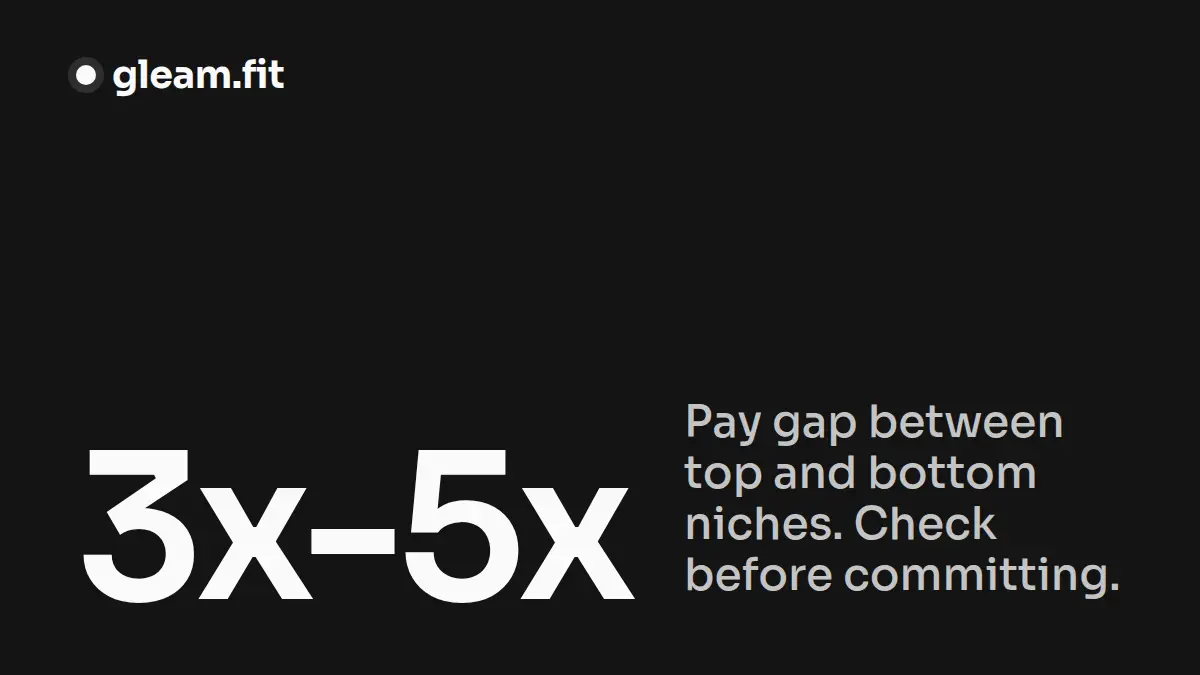
YouTube CPM by Niche: How to Read a Niche's Pay Ceiling Before You Commit
Two YouTube niches with the same views can earn very different money. A niche sets its CPM band the day you pick it — here's how to read that pay ceiling before you commit.
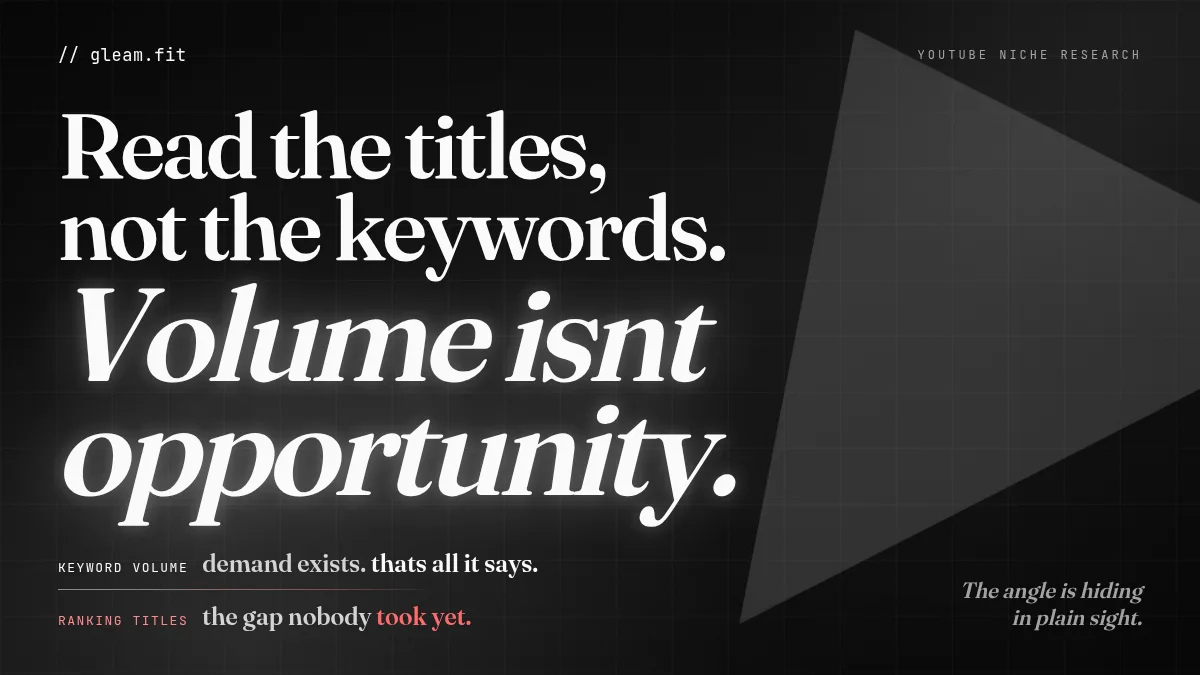
YouTube Niche Research: Read the Titles, Not Just the Keywords
Most niche research stops at search volume. The titles already ranking for your keyword reveal the consensus angle everyone copied — and the gap nobody has taken yet. Here's how to read them before you commit.
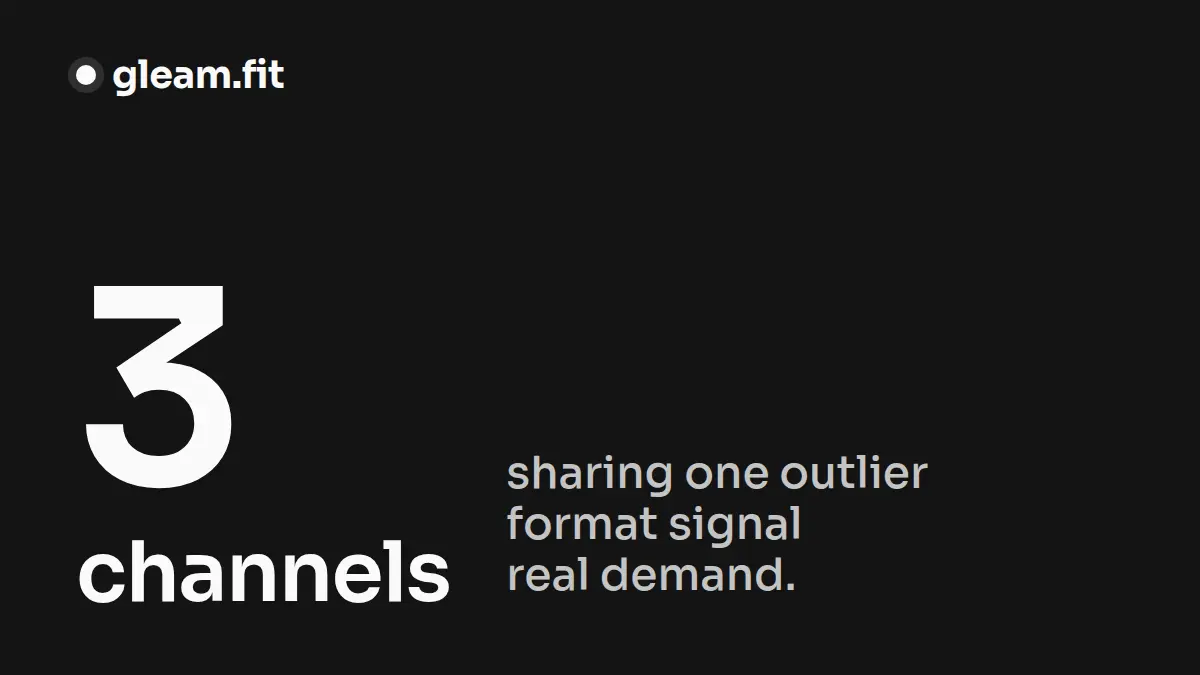
One Outlier Is Luck. Three Across Channels Is a Niche Signal
One viral outlier can be luck. When the same format outperforms across several channels in a niche, it signals demand you can read before you commit.