YouTube Traffic Sources: Why Search Drives Growth

You posted 30 videos. Your YouTube Analytics show almost zero Browse Features traffic. You assume the algorithm is ignoring your channel.
It probably isn't. The real issue is that you're waiting for a traffic source that doesn't work the way you think it does — especially for small channels. This guide breaks down how YouTube's traffic sources (Search, Browse, Suggested, External) actually function, why Search is the most reliable growth engine for creators under 10K subscribers, and how your niche determines which traffic source you should optimize for first.
Why Isn't YouTube Recommending Your Videos?
YouTube's recommendation system — the algorithm powering your homepage, Suggested videos, and autoplay — drives roughly 70% of all watch time on the platform. That figure comes from YouTube's Chief Product Officer speaking at an industry panel in 2018, and has been widely cited by sources including Hootsuite and WordStream. YouTube has not revised it publicly since.
For most creators, recommendations are the dream. Get on someone's homepage, and views arrive without effort. But here's the part that rarely gets mentioned: according to research by Mathias Bärtl at Offenburg University of Applied Sciences, the top 3% of YouTube channels capture nearly 90% of all views. That concentration means the recommendation engine overwhelmingly serves established channels with proven watch histories, high retention, and deep content libraries.
If you're a channel with 500 subscribers wondering why the algorithm hasn't "found" you yet, this is why. You're not being punished. You're trying to access a traffic source that statistically favors channels with years of accumulated viewer data.
How Do YouTube Traffic Sources Actually Work?
YouTube Studio breaks your traffic into several source types. Understanding what each one means — and which ones you can actually influence at your current stage — is the first step toward a smarter growth strategy.
Browse Features includes the YouTube homepage and subscription feed. YouTube shows videos here based on each viewer's personal watch history. You don't choose to appear here — YouTube decides based on signals from your past performance and how similar viewers have responded to your content.
Suggested Videos are recommendations that appear alongside or after other videos. YouTube suggests your video when it believes your content will satisfy someone who just watched something related. This source depends heavily on your channel's topic consistency and viewer overlap with similar channels.
YouTube Search is traffic from viewers who typed a query into YouTube's search bar and found your video in the results. Unlike Browse and Suggested, Search traffic is driven by the viewer's intent, not the algorithm's prediction. This makes it the most controllable traffic source available to any channel, regardless of size.
External traffic comes from outside YouTube — Google search results, social media posts, blog embeds, and direct links. Shorts Feed traffic comes from the swipeable Shorts experience on mobile. Both are valuable but operate on different mechanics than long-form discovery.
Why Is Search the Best Starting Point for Small Channels?
Search is the only YouTube traffic source where your content quality matters more than your channel authority. A well-optimized video on a specific topic can rank alongside channels with ten times your subscriber count — if it answers the query better.
According to TubeBuddy's 2026 analytics guide for channels under 1,000 subscribers, the growth signal worth watching for is an increase in YouTube Search and Browse Features traffic. These sources bring in new viewers who aren't already part of your existing audience — unlike notifications or direct traffic, which mostly reach people who already know you.
But there's a critical difference between the two. Browse Features requires YouTube to already understand your audience. It needs data from past viewer behavior to decide who to show your video to. A channel with 20 videos and 300 subscribers simply doesn't generate enough signal for Browse to work reliably.
Search works differently. A viewer types "how to find a YouTube niche" into the search bar. If your video matches that query — through its title, description, and content — it can appear regardless of your subscriber count, channel age, or accumulated watch history. The viewer's intent does the work, not your channel's track record.
How Does Search Traffic Lead to Recommendations?
Search traffic doesn't just bring views. It teaches the algorithm who your audience is. When a viewer finds your video through Search and watches a significant portion, YouTube collects two critical data points: what your video is about, and what type of viewer enjoys it.
Those signals are exactly what powers the Suggested and Browse systems. As NexLev's 2026 creator guide explains, search traffic often acts as the initial push that leads to recommended traffic. When your video ranks in Search, YouTube begins suggesting it to viewers watching similar content — and that's where growth accelerates.
The progression typically follows a pattern:
Search → Suggested → Browse.
First, intent-driven viewers find you through queries. Their engagement teaches YouTube your audience profile. Then YouTube starts suggesting your video alongside related content. Eventually, if retention and satisfaction signals are strong enough, your videos appear on homepages through Browse Features.
Channels that skip Search and try to jump straight to Browse are skipping the step that teaches YouTube who to recommend them to. Without that foundational viewer data, Browse traffic has nothing to work with.
How Does Your Niche Decide Your Traffic Source?
Not all niches generate traffic the same way. The type of content you create fundamentally determines which traffic source will drive your growth.
Question-driven niches — tutorials, how-to guides, software walkthroughs, educational content — generate heavy Search traffic by design. Viewers arrive with a specific problem. They type queries like "how to edit YouTube thumbnails" or "best microphone for YouTube under $100." These niches have built-in search demand that small channels can capture immediately.
Entertainment-driven niches — vlogs, reaction content, commentary, gaming — run almost entirely on Browse and Suggested traffic. Viewers don't search for these videos. They discover them while scrolling the homepage or watching related content. These niches require higher channel authority before the recommendation system reliably kicks in.
If you're in a question-driven niche and your analytics show almost zero Search traffic, your titles, descriptions, and metadata likely need work. You have a built-in audience actively searching for what you make — you're just not visible to them yet.
What Does a Healthy Traffic Source Mix Look Like?
According to Humble&Brag's 2026 YouTube channel audit benchmarks, a healthy traffic distribution for business and educational channels looks roughly like this: Search at 15–30%, Browse Features at 25–40%, Suggested Videos at 15–25%, and External at 5–15%. Their analysis notes that if any single source dominates above 60%, the channel has a structural dependency that limits growth.
For small channels in the early growth phase, the mix will look different. Search may account for 40–60% of total traffic, and that's expected. The sign of progress isn't reducing Search — it's seeing Suggested and Browse percentages climb alongside it.
The common mistake is treating Search as training wheels you eventually outgrow. It's not. Even large channels benefit from maintaining strong Search traffic because it continuously feeds fresh viewer data into the recommendation engine. Search is a launchpad, not a ceiling.
Here's what to do right now: open YouTube Studio, go to the Reach tab, and check your traffic source breakdown. If you're in a question-driven niche and Search is below 10%, your most accessible growth lever is untouched. If Search is strong but Suggested stays flat, your retention or topic consistency may need attention. Your traffic sources aren't just a report — they're a diagnostic that tells you exactly where your growth strategy needs work.
Ready to find your next video idea?
Gleam helps you discover content gaps and outlier videos with real YouTube data.
Start Free TrialRelated Articles
Why Small YouTube Channels Get Outlier Views
Outlier videos rarely come from new topics. Small channels borrow proven formats across niches — and YouTube's 2025 shift now favors the strategy.
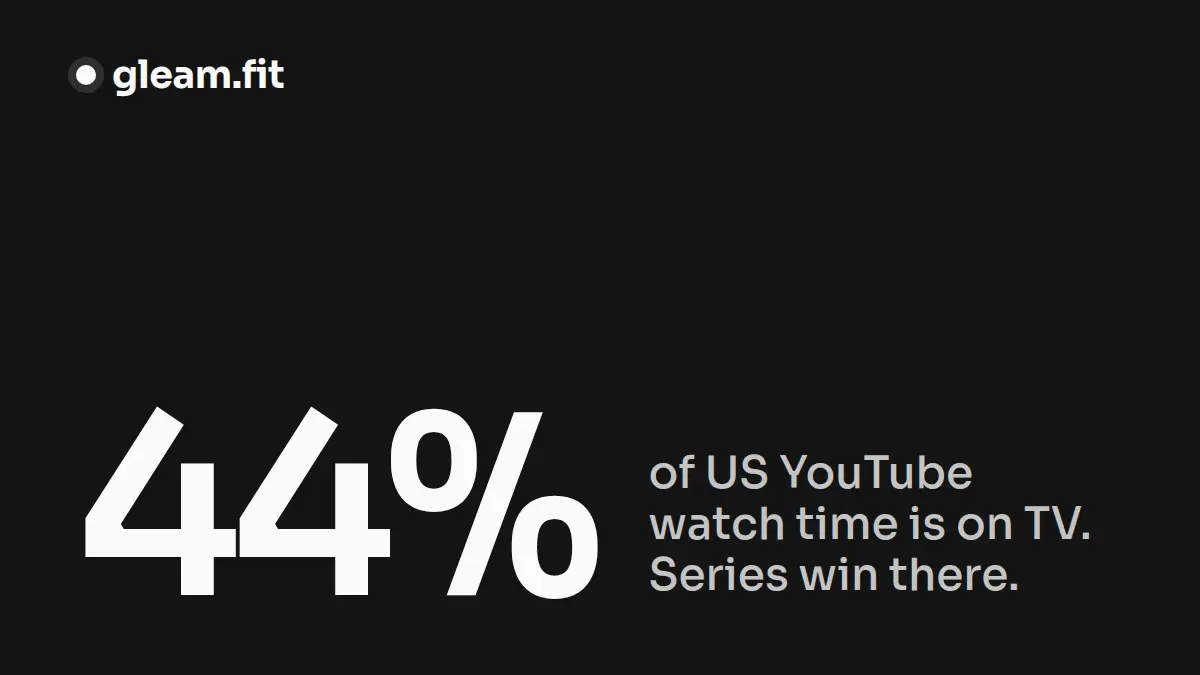
YouTube CTV: Why Niche Channels Win the Living Room
44%+ of US YouTube watch time now happens on connected TV. The living room rewards niche channels with episodic structure over broad feeds.
YouTube Not Interested: Why Hidden Feedback Kills Your Reach
YouTube's "Not Interested" clicks are invisible to creators but quietly shape your channel's reach. Here's how they work and why niche focus is your defense.