YouTube Niche Research vs Keyword Research: Why Volume Picks the Wrong Channel
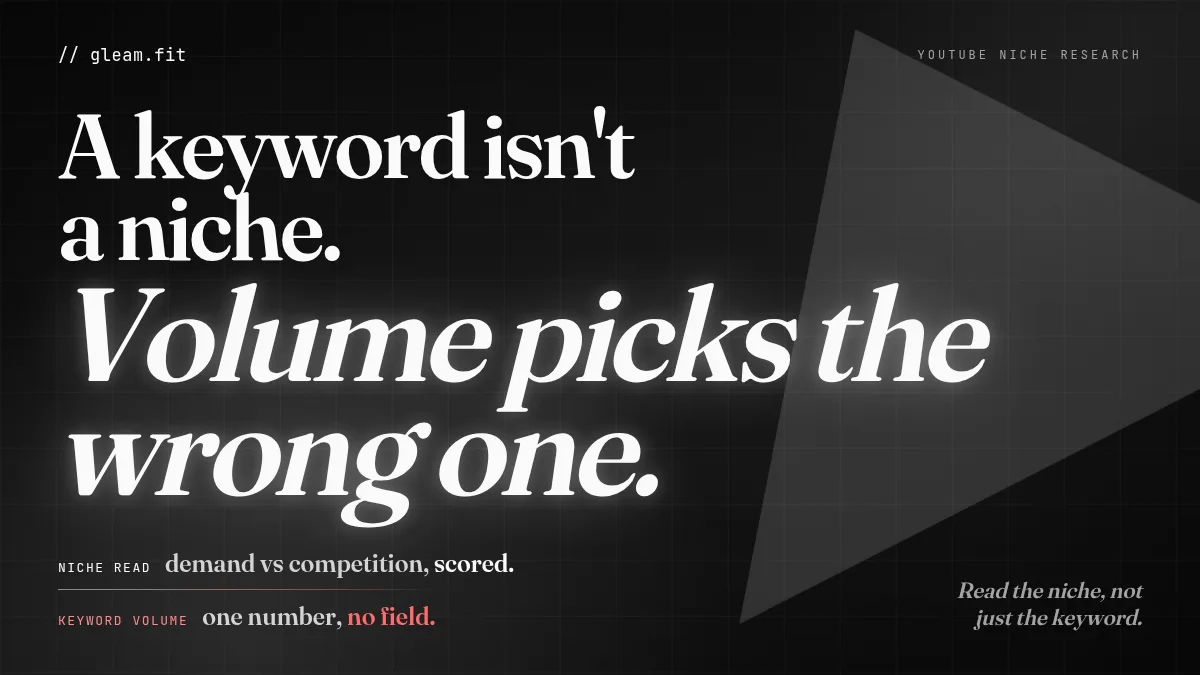
I build gleam, a niche research tool for YouTube creators. I keep meeting creators who did their homework — they found a high-volume keyword, they made the videos — and the channel still stalled. Almost every time, the mistake was the same: they researched a keyword when they needed to research a niche.
Quick answer: Keyword research and niche research answer different questions. Keyword research asks whether a video topic gets searched. Niche research asks whether the field you are about to commit a channel to is winnable and worth it. Search volume only measures the first question. A keyword can have strong volume and still sit inside a niche that a few large channels already own, that no one returns to, or that barely pays. If you pick your niche on volume alone, you can spend months making videos people technically search for, in a field you were never going to win. Research the niche first; pick keywords inside it second.
What is the difference between niche research and keyword research?
Keyword research is about a single query — does anyone search this phrase, and how often. Niche research is about the whole field that query lives in — how many channels hold the top results, how big they are, whether the audience returns, and whether the topic pays. A keyword is one data point; a niche is the structural ground you stand a channel on for years.
This matters because the two get used interchangeably, and they should not be. A keyword tool answers "is this title worth making a video about?" That is a useful question once you already know your field. But the decision that actually shapes your channel — which field to enter at all — needs a wider read than any single query can give you. When you confuse the two, you let a one-number metric (volume) make a multi-year decision (your niche).
Why does search volume mislead you when you pick a YouTube niche?
Search volume misleads on niche selection because it is a per-query number, and a niche is a per-field decision. Volume tells you a topic is searched. It says nothing about who already owns that topic, whether viewers come back for more, or whether the niche pays enough to matter. The keywords that are easiest to find — the high-volume ones — are usually the most contested, because volume attracts supply.
Three blind spots come up over and over:
- Concentration. A keyword can show big volume while a handful of large channels absorb almost all of those views. High demand plus high concentration is not an opening — it is a closed door with a crowd outside it. (I dug into this in why a niche run by too few channels is hard to enter.)
- Reachability. Volume measures searches, not the audience a new channel can realistically reach. A bigger search number often maps to a smaller reachable audience, because the field is locked up — the paradox I walked through in why a bigger niche can have a smaller reachable audience.
- Money. Two niches with identical volume can pay very differently. Volume has no idea what a niche earns per thousand views, and that gap is large enough to decide whether a channel is a business or a hobby.
None of these are exotic edge cases. They are the default reason a "validated" keyword turns into a stalled channel.
What does YouTube niche research actually check?
Niche research reads the field, not the phrase. It checks four things a single volume number can't: real demand (is interest there and holding), competition by typical channel size (not just how many videos exist), how concentrated the field is (a few owners or many), and whether the niche monetizes. Put together, those tell you if there is room for one more channel — yours.
This is the read gleam is built to do, so I will be concrete about how it works and where it stops. gleam scores a niche on three things at once and combines them into one Gap Score: a freshness gap (how stale the top content is), a quality gap, and a demand signal. The piece that matters most here: gleam weights raw result volume at just 20% of its demand signal, and leads instead with YouTube autosuggest (50%) and Google Trends momentum (30%). In other words, the tool deliberately treats keyword volume as a minority input — because on its own, volume is the least reliable part of the picture.
It reads the rest of the field the same way:
- Competition by median channel size, not video count — so one giant channel in the results doesn't fool the read (a video count just measures supply; I covered why that's the wrong unit in how to check if a niche is saturated).
- Channel concentration — how many unique channels actually hold the top results, so you can see whether the field is owned by a few or open to many.
- A CPM estimate by category, so the "does it pay" question is on the table before you commit, not after.
One honest limit, because it is the whole point of this post: gleam does not hand you a "12,000 searches per month" number for a keyword. It is not a keyword-volume lookup. It reads demand as a blended, niche-level signal — on purpose — because a single volume figure is exactly the thing that leads creators astray.
How do you research the niche first, then the keyword?
Do it in that order: field first, query second. Read the niche as a whole — demand that's real and holding, competition you can actually place against, a field that isn't owned by three channels, and a CPM that's worth your time. Only once the field passes do you go looking for the specific keywords and titles to make inside it. The niche is the decision; the keyword is the execution.
In gleam that sequence is built in. You score the niche first with the Gap Score and the competition read. Then the Suggested Keywords come after — they are pulled from the top videos already winning in that field (titles weighted heaviest, then tags, then descriptions) and refined, so the keywords you chase are ones proven to work inside a field you already validated. Keyword discovery is downstream of the niche read, not the thing the decision rests on. If you've been picking your niche off a volume number, run the niche itself through a field-level read before your next upload — start free on gleam.fit.
When is keyword research still the right tool?
Keyword research is the right tool once your niche is set and you're deciding what to film next. At that stage, exact search volume, autocomplete data, and tag scores genuinely help — and dedicated keyword tools like vidIQ and TubeBuddy are built for that job and do it well. The difference is one of order, not rivalry: they answer "which video next?", and niche research answers the question that comes before it, "which field at all?"
So this isn't an argument against keyword research. It's an argument against letting it make a decision it was never designed for. Use a volume number to choose between two titles inside your niche. Don't use it to choose the niche. If you've already committed your channel, the same field signals tell you whether to estimate the reachable audience you actually have — and whether it's time to narrow rather than start over.
Frequently asked questions
Is niche research the same as keyword research? No. Keyword research measures whether a single query is searched. Niche research reads the whole field — demand, competition, concentration, and monetization — to decide whether a channel can win there. One picks a video; the other picks a channel's direction.
Can a high-volume keyword still be a bad niche? Yes, and often. High volume frequently means a contested field already owned by a few large channels, or a topic people search once and never return to, or a niche that barely monetizes. Volume alone can't see any of that.
Should small channels do keyword research at all? Yes — after you've chosen your niche. Once the field is set, keyword research helps you pick which videos to make inside it. The mistake is using volume to choose the field itself.
— Find your niche → gleam.fit
Ready to find your next video idea?
Gleam helps you discover content gaps and outlier videos with real YouTube data.
Start Free TrialRelated Articles
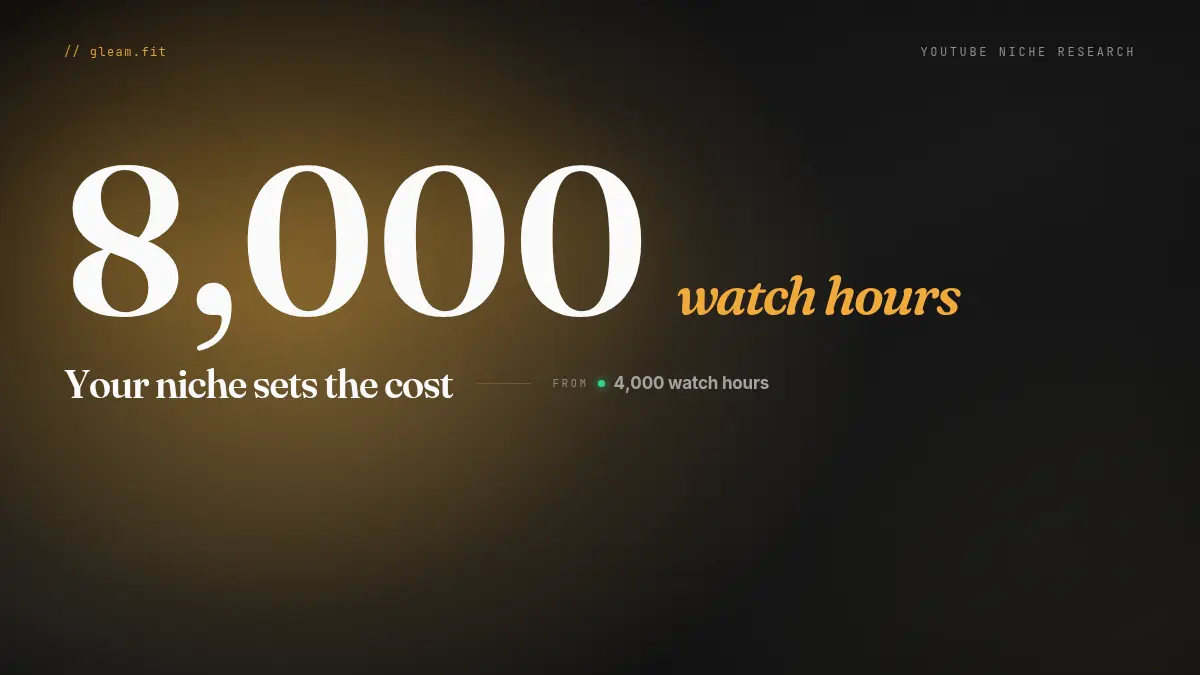
YouTube's 8,000 Watch Hours Rule Is a Niche Math Problem
The YouTube Partner Program bar doubles to 8,000 watch hours on February 1, 2027. That is 480,000 minutes, and the views it takes to produce them depend on your niche's format length — a 4x spread between short- and long-format niches.
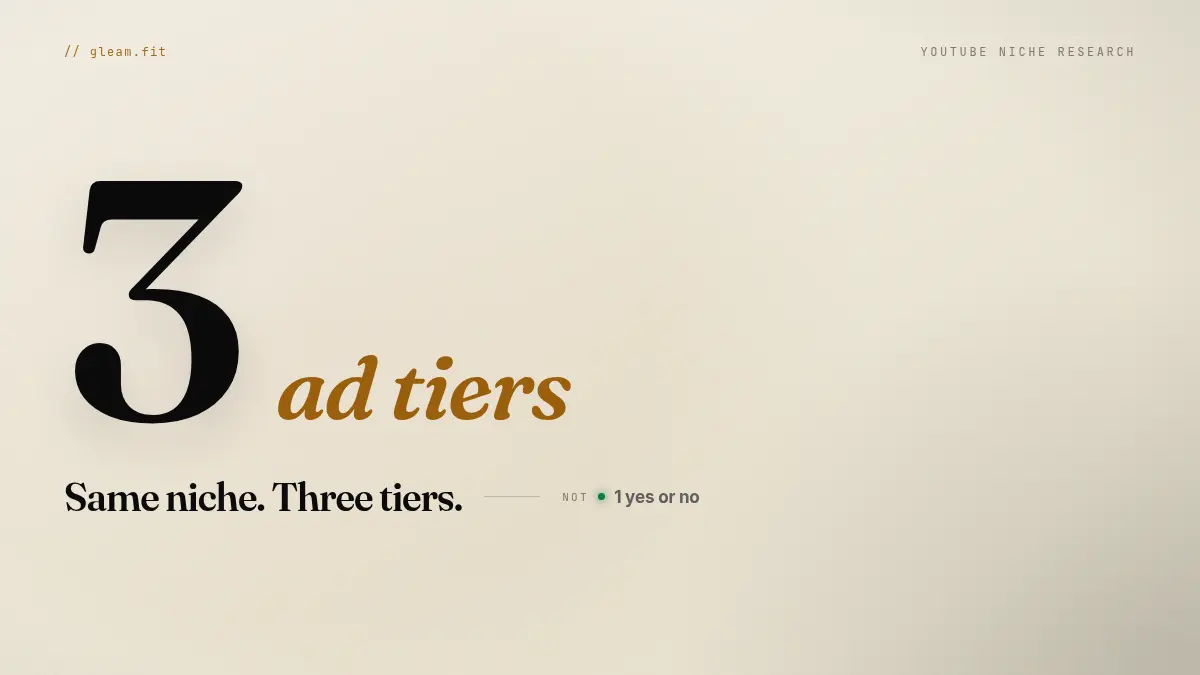
Which YouTube Niches Get Limited Ads — and What Moves Them Up
YouTube sorts the same niche into three ad-revenue tiers, not a yes or no. Which niche archetypes sit on two rungs at once, which lever moves them up, and the one line that no framing fixes.
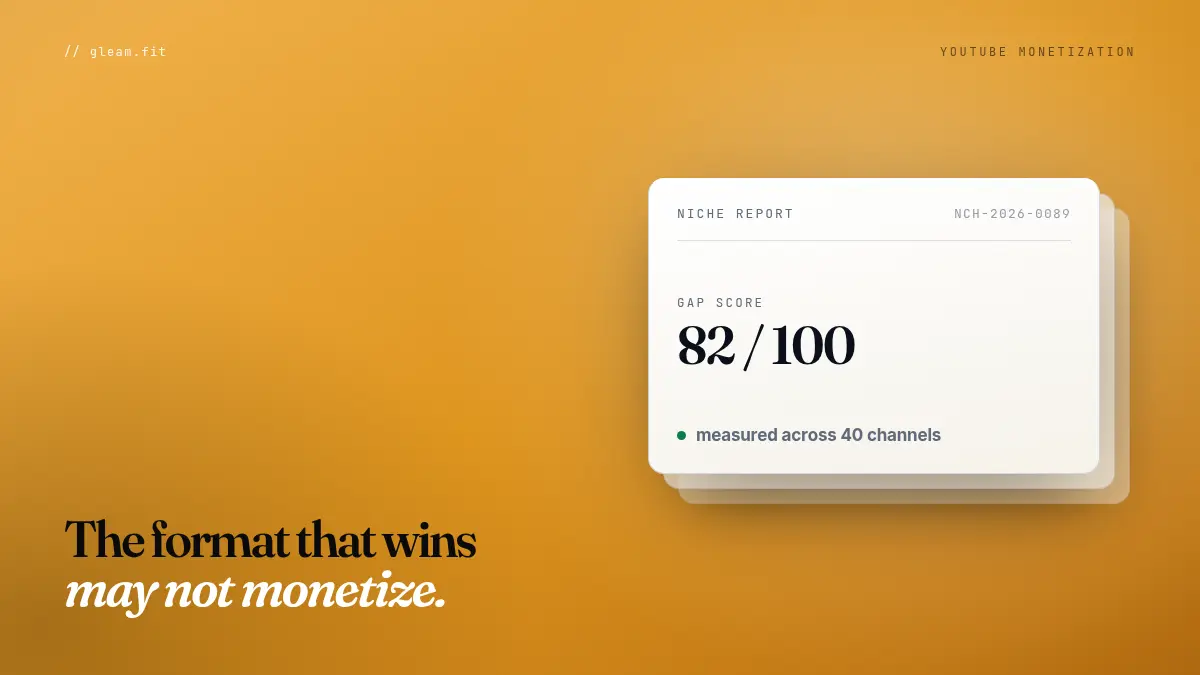
Some YouTube Niches Reward Formats YouTube Won't Monetize
YouTube just named three content types it won't monetize — templated, off-putting, and fake-AI-expert. The catch for new creators: that risk is set the day you pick a niche. Here's how to score a niche's format exposure before you commit.